How do you dilute concentrates the right way?
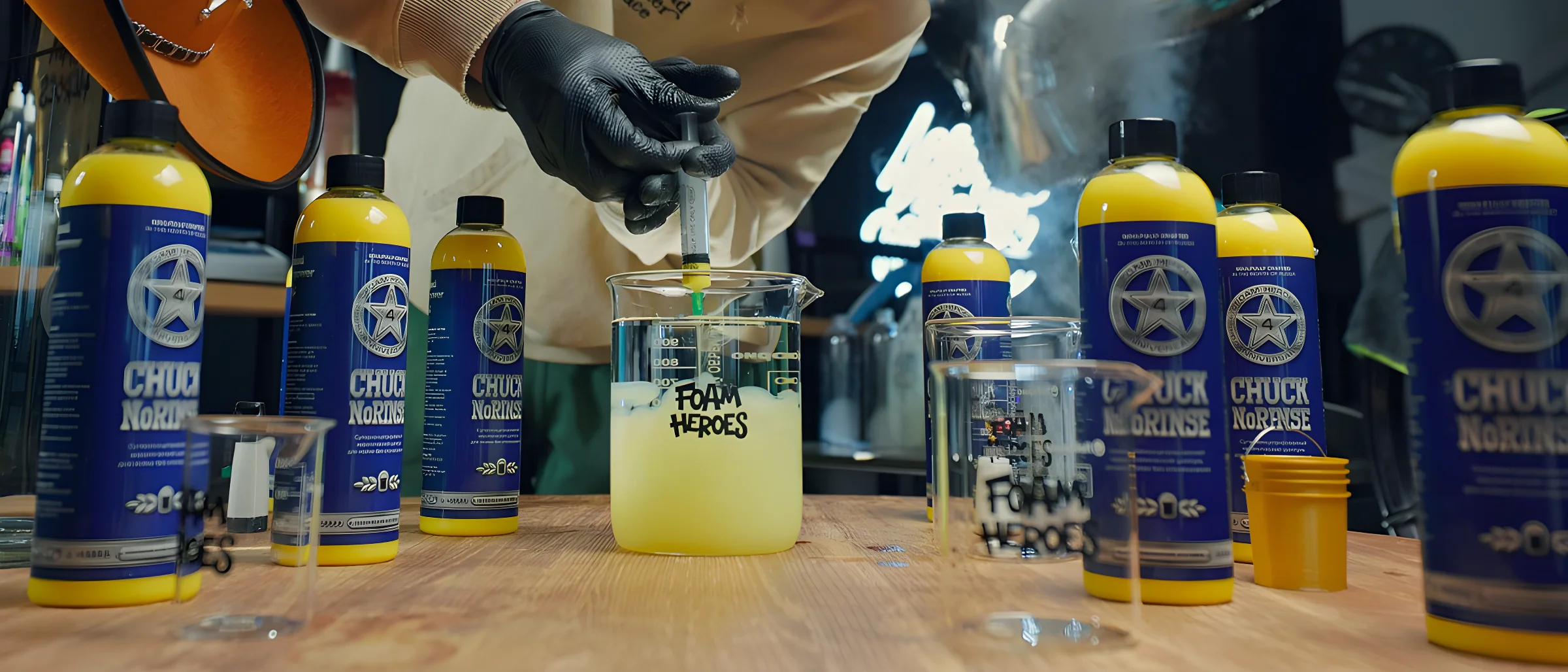
Ratios like 1:10, 1:20, 1:50 — what do they mean, and how do you figure out how much concentrate and water you actually need?
One of the most common questions about detailing chemicals is a simple one:
"How much soap should I pour in?"
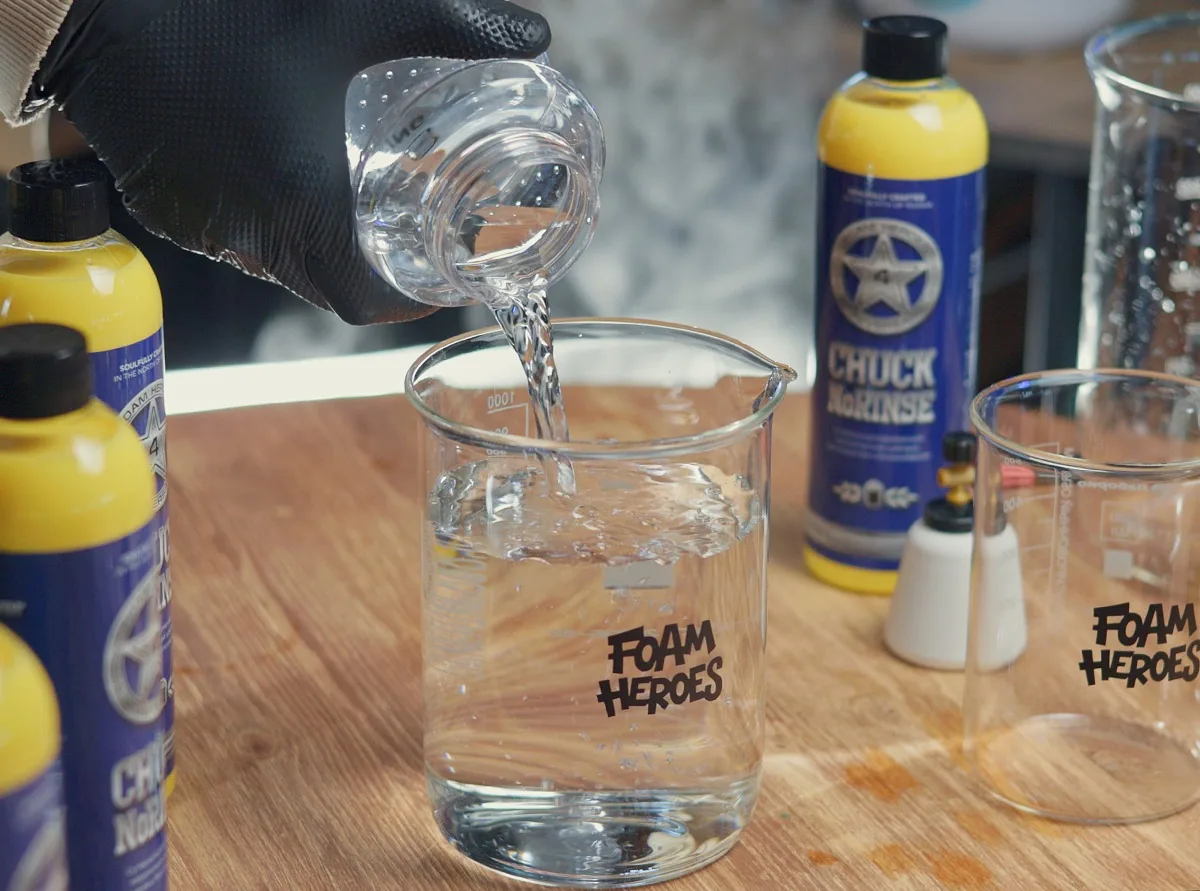
In practice, there is no single universal ratio. The concentration depends on the product itself, how dirty the surface is, the application method and the surface you plan to clean. Let's walk through some specific examples.
Start with the basics — how to calculate a ratio
When you mix a working solution, start with the volume of the container you're mixing in. For example, if you use a 1 L (33.8 fl oz) pump sprayer, the finished solution should not exceed the volume of the tank.
Keep in mind: 1:10 means one part concentrate and ten parts water. But that doesn't always mean the final volume will be exactly 1 L (33.8 fl oz).
For example:
80 ml (2.7 fl oz) of concentrate + 800 ml (27.1 fl oz) of water = 880 ml (29.8 fl oz) of finished solution. So first you pick the concentration you need, then you calculate how much of each component goes into your specific container.
What does the concentration depend on?
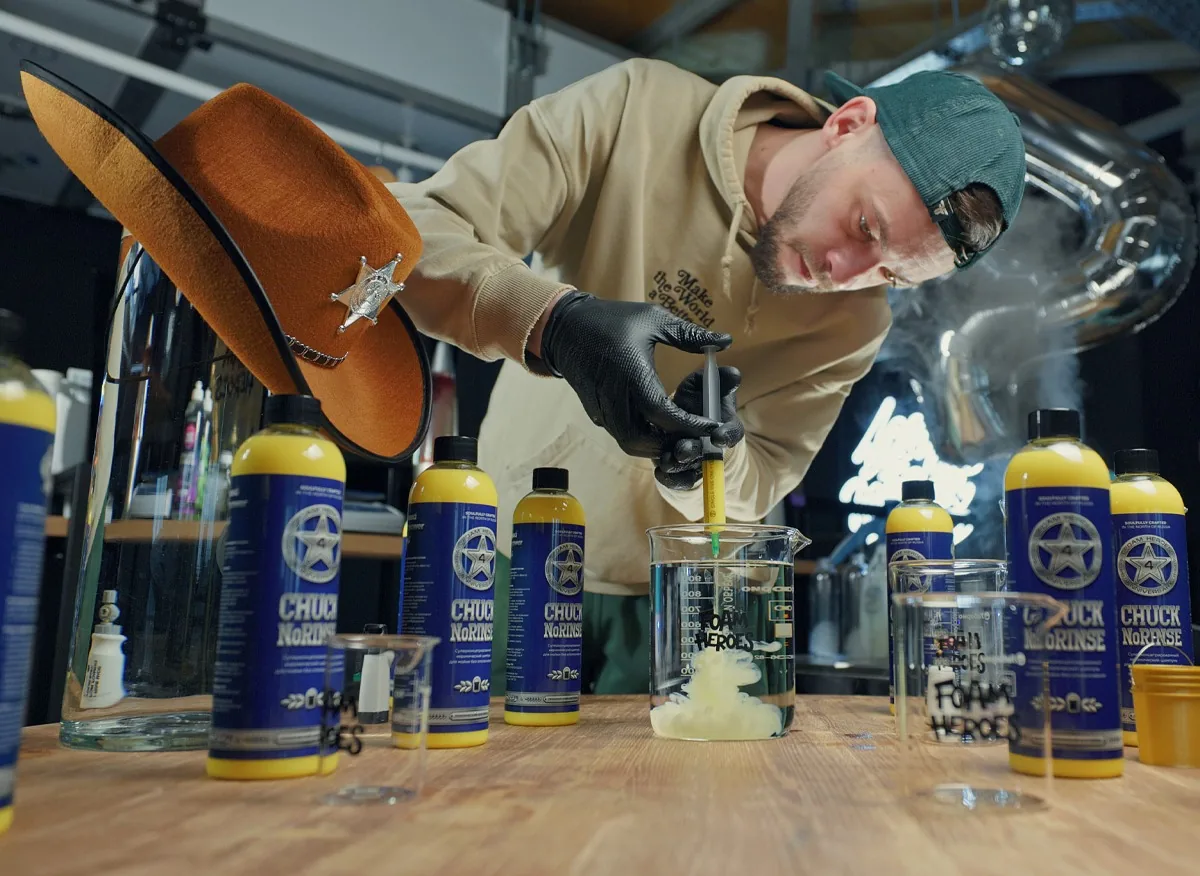
The same product can be used at different concentrations. It comes down to:
- the application method
- how dirty the surface is
- the surface
A foam cannon usually calls for one concentration, a hand sprayer for another, and a contact wash for a much weaker solution. Let's look at a few examples.
1:10, 1:15, 1:30 — how much concentrate and water do you add to get a working solution?
It all depends on the product, the application method, how dirty the surface is and the surface itself. And one important note: below we calculate the ratios for 500 ml (16.9 fl oz) of finished solution. So how do you calculate a ratio?
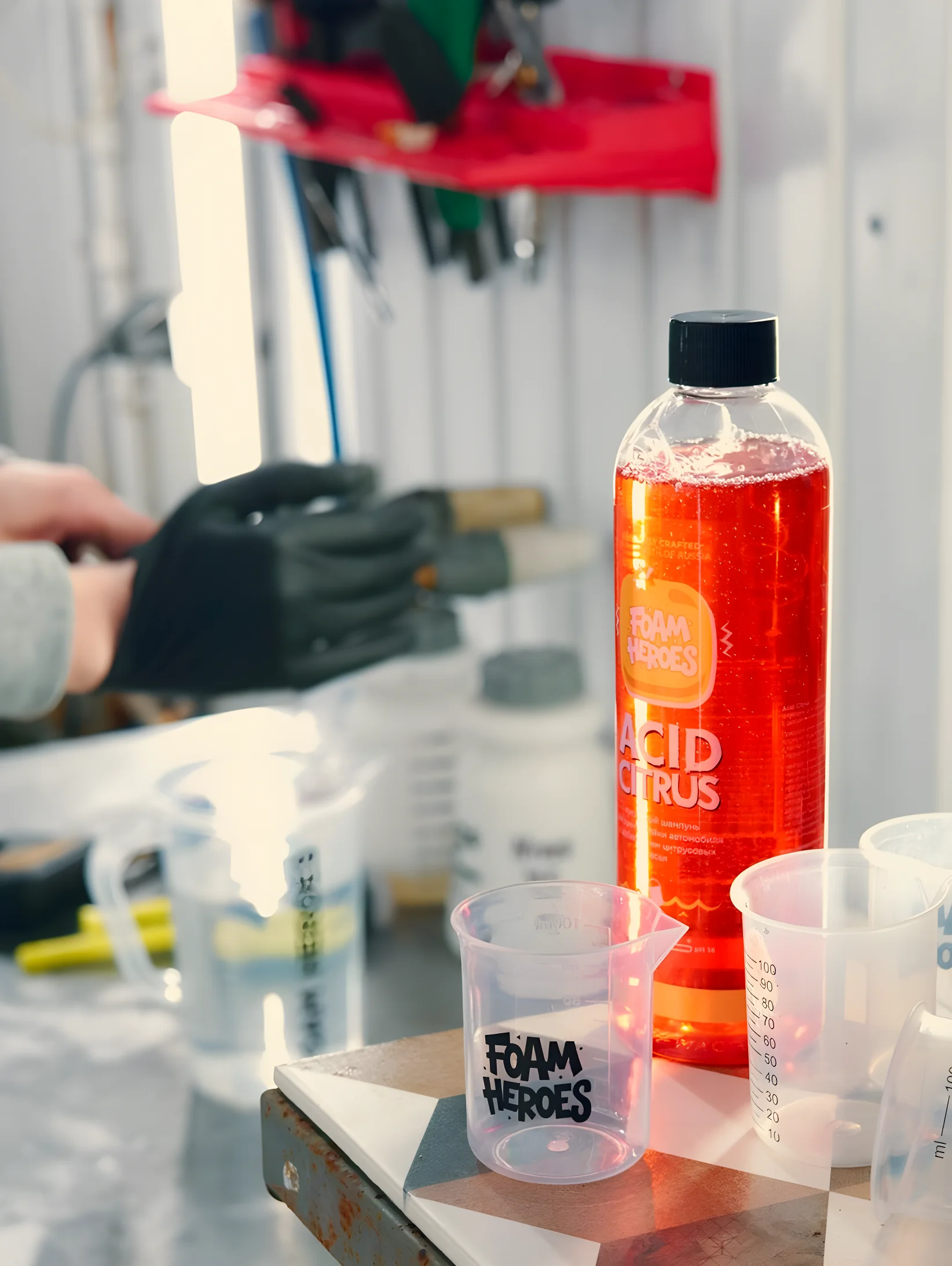
A 1:10 ratio means 1 part concentrate and 10 parts water. To get 500 ml (16.9 fl oz) of finished solution: 45.5 ml (1.5 fl oz) of concentrate + 454.5 ml (15.4 fl oz) of water.
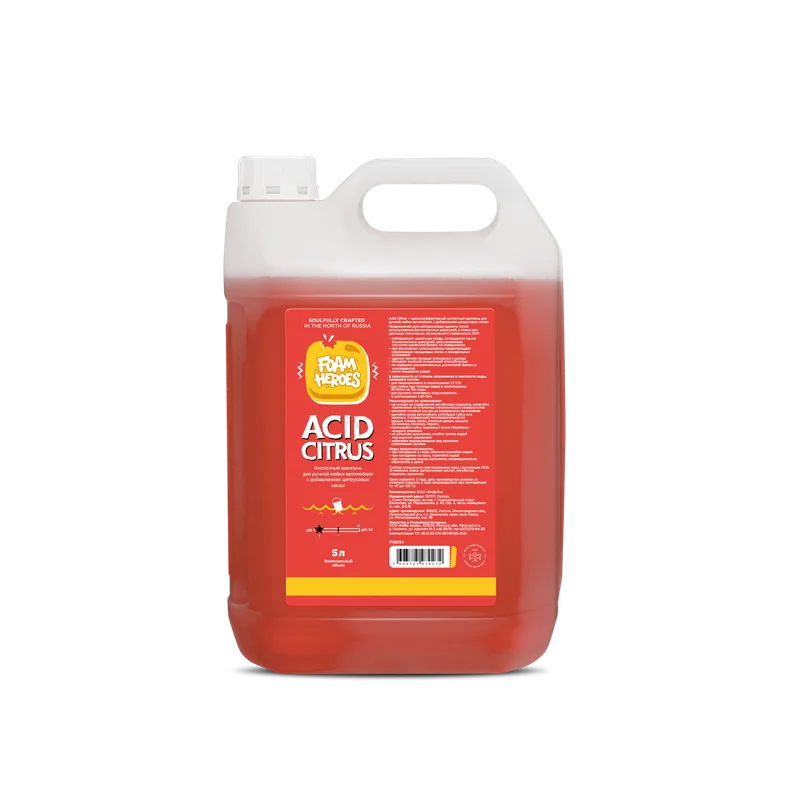
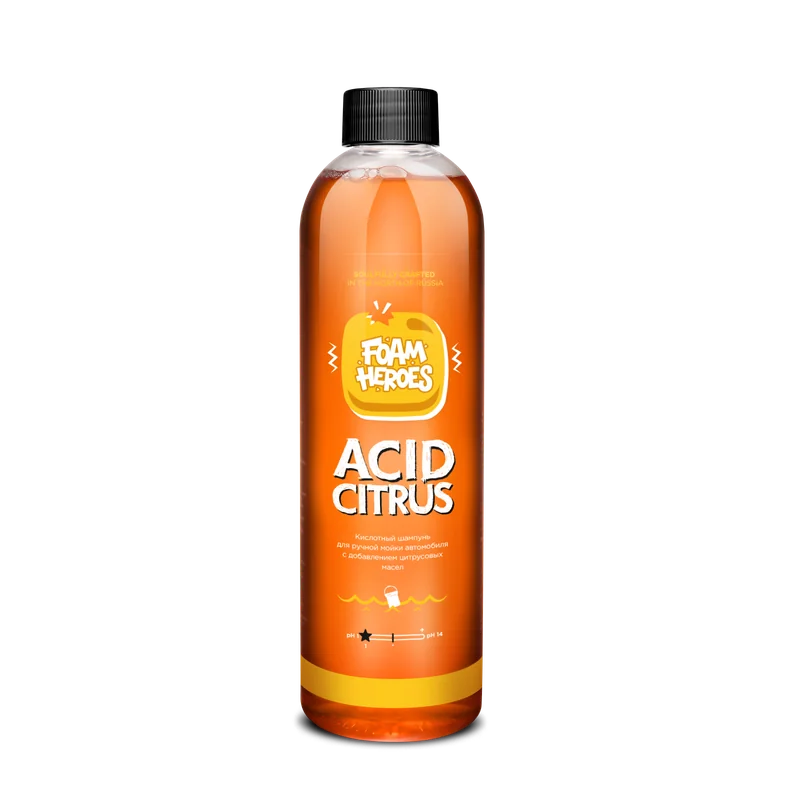
Acid Citrus
Acid Citrus — an acidic car wash soap Foam Heroes for tough contaminants, mainly mineral deposits, road grime and other dirt that a regular car wash soap can't handle.
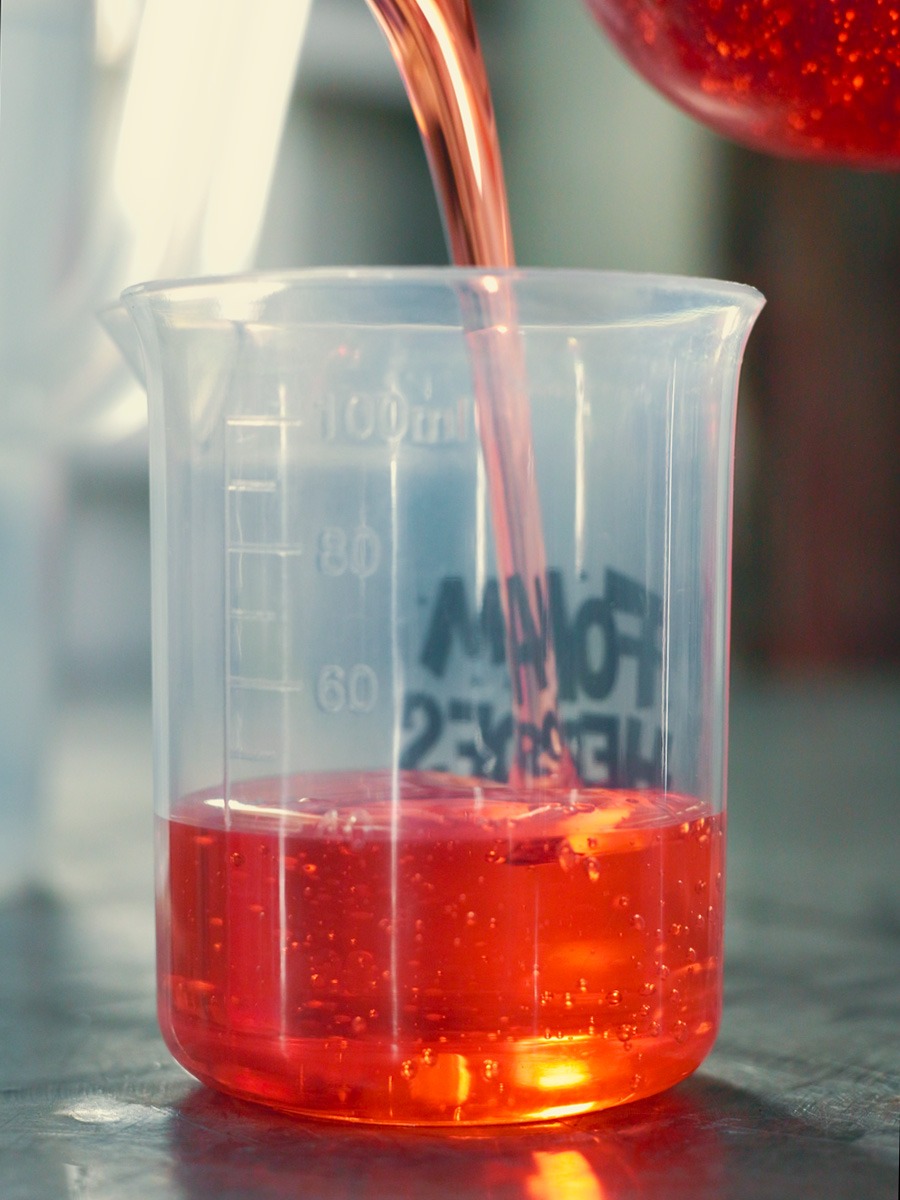
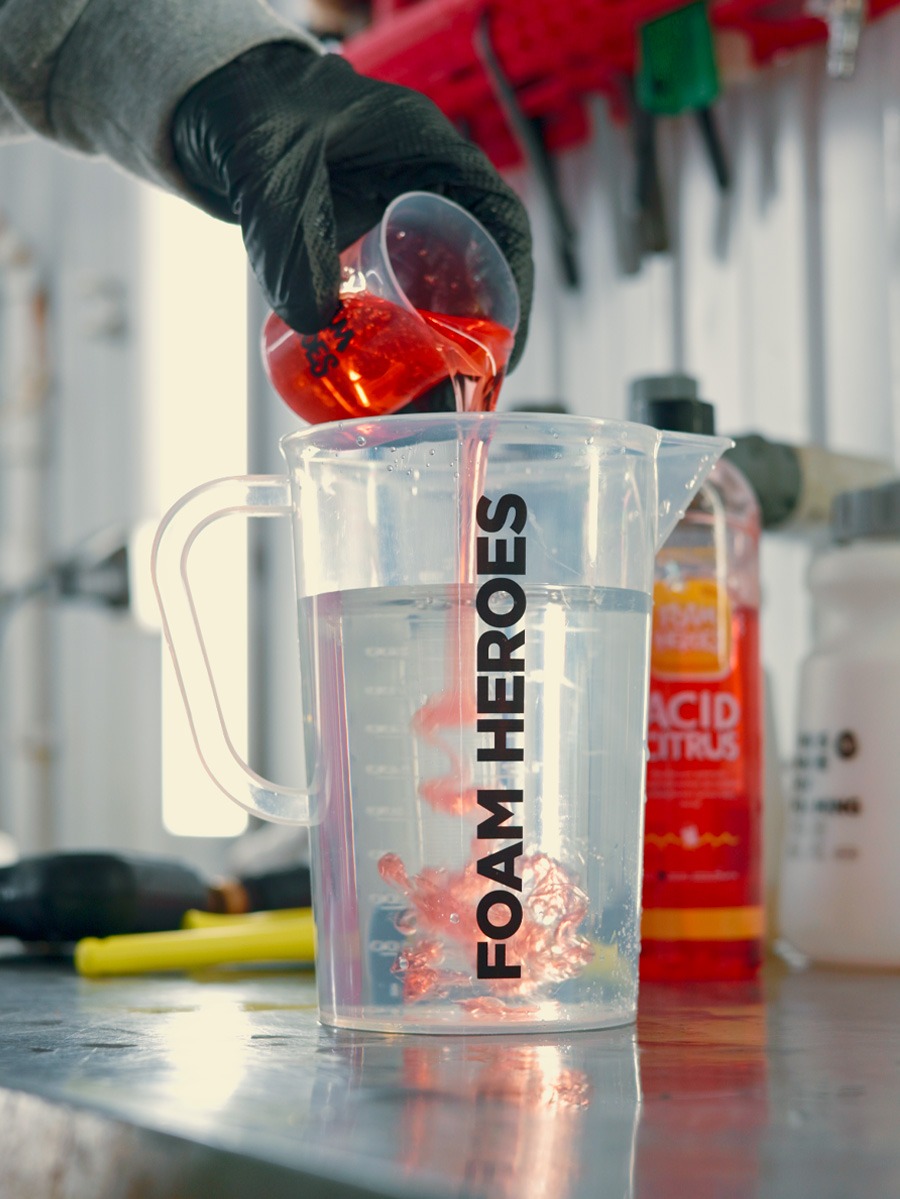
1. Contact wash in a bucket. Range: 1:200–1:250.
Per 10 L (2.6 gal) of water:
- 1:250 — 40 ml (1.4 fl oz) Acid Citrus
- 1:200 — 50 ml (1.7 fl oz) Acid Citrus
So the working range is 40–50 ml (1.4–1.7 fl oz) to 10 L (2.6 gal) of water. For regular washing — 1:250. If you need a stronger mix — 1:200.
2. Foam cannon. Range 1:5–1:12.
Based on 1 L (33.8 fl oz) of finished solution:
- 1:12 — 77 ml (2.6 fl oz) Acid Citrus + 923 ml (31.2 fl oz) of water
- 1:5 — 167 ml (5.6 fl oz) Acid Citrus + 833 ml (28.2 fl oz) of water
So the working range is: 77–167 ml (2.6–5.6 fl oz) of concentrate per 1 L (33.8 fl oz) of finished solution.
Here's how I do the math:
- at 1:12 that's 13 parts total → 1000 ÷ 13 = 77 ml (2.6 fl oz) of concentrate.
- at 1:5 that's 6 parts total → 1000 ÷ 6 = 167 ml (5.6 fl oz) of concentrate.
3. Pump sprayer. Range 1:20–1:40.
Per 1 L (33.8 fl oz) of finished solution:
- 1:40 — 24 ml (0.8 fl oz) Acid Citrus + 976 ml (33 fl oz) of water
- 1:20 — 48 ml (1.6 fl oz) Acid Citrus + 952 ml (32.2 fl oz) of water
So the working range is: 24–48 ml (0.8–1.6 fl oz) of concentrate per 1 L (33.8 fl oz) of finished solution.
Same math here:
- 1:40 → 1000 ÷ 41 = 24.4 ml (0.8 fl oz) of concentrate.
- 1:20 → 1000 ÷ 21 = 47.6 ml (1.6 fl oz) of concentrate.
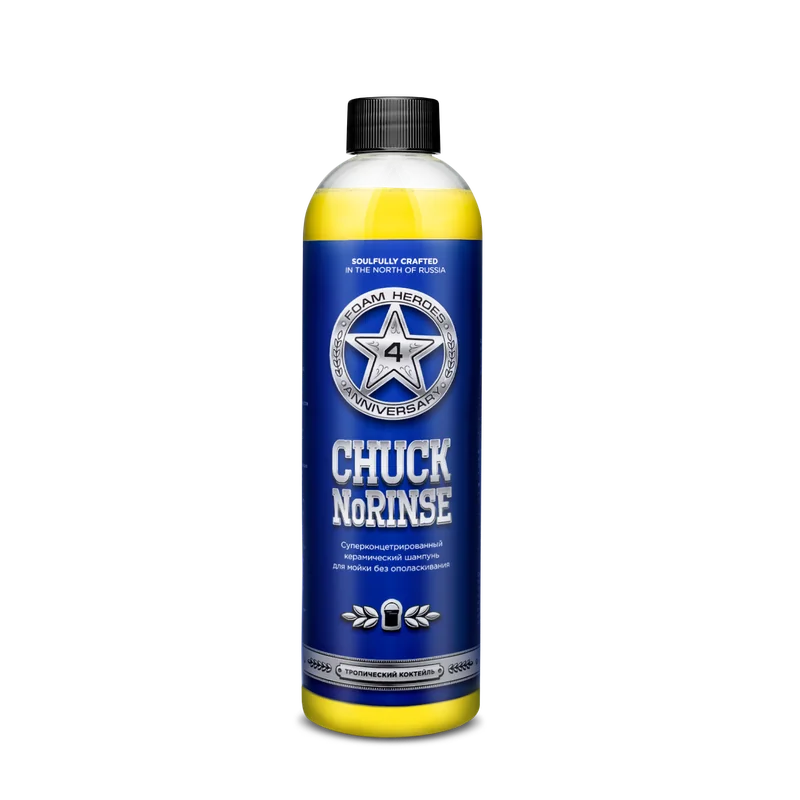
Chuck NoRinse
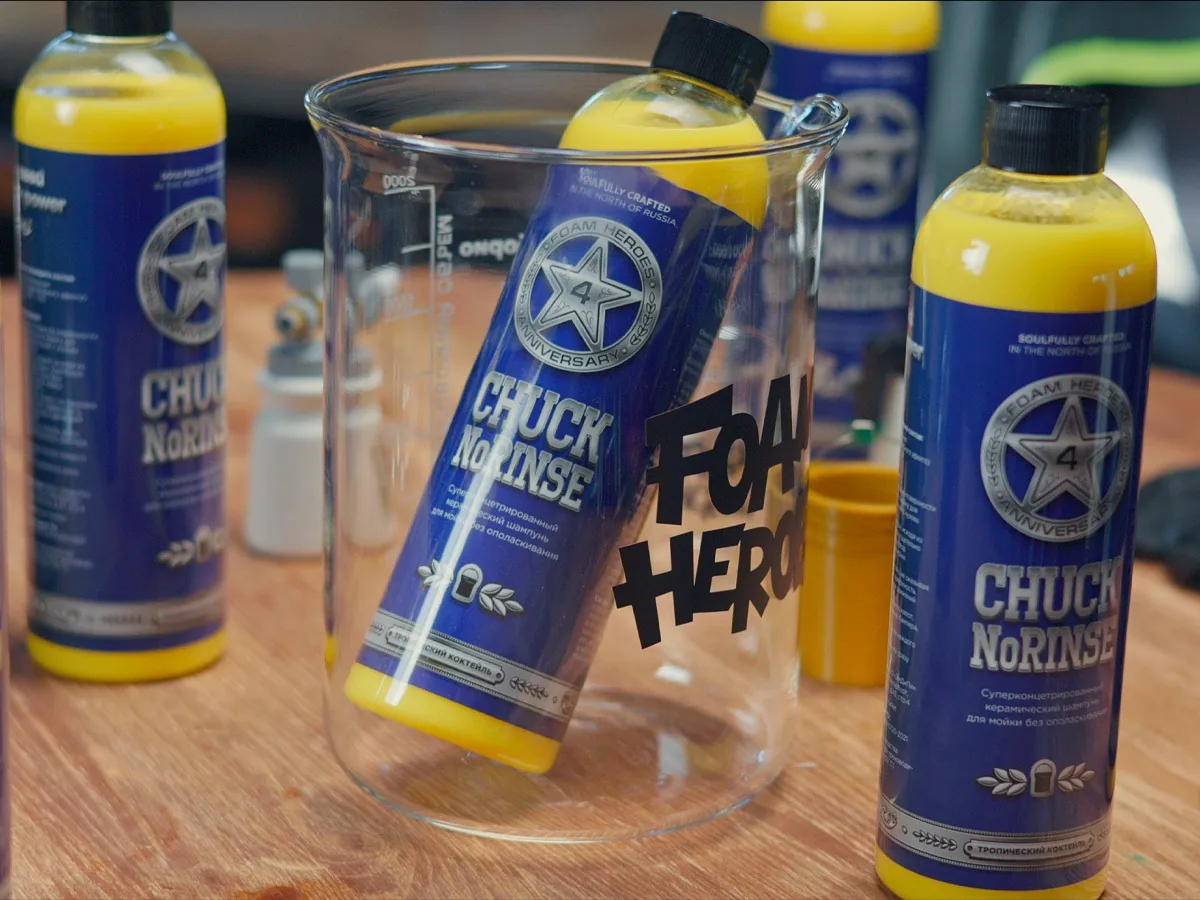
Chuck NoRinse — a concentrated ceramic rinseless wash soap. You can use it not only for a rinseless wash, but also as a clay lubricant and as a quick detailer.
1.Rinseless wash. Working dilution 1:250–1:500. This is the main way to use it.
Per 10 L (2.6 gal) of water:
- 1:500 — 20 ml (0.7 fl oz) Chuck NoRinse
- 1:250 — 40 ml (1.4 fl oz) Chuck NoRinse
Per 500 ml (16.9 fl oz) of water:
- 1:500 — 1 ml (0 fl oz) Chuck NoRinse
- 1:250 — 2 ml (0.1 fl oz) Chuck NoRinse
For regular washing you can go with a weaker dilution. If you need the product to work harder, bump the concentration up to 1:250.
2. Clay lubricant. For spot claying, use a 1:60–1:70 dilution.
Per 500 ml (16.9 fl oz) of water:
- 1:70 — 7 ml (0.2 fl oz)
- 1:60 — 8.3 ml (0.3 fl oz)
This mix gives the clay the slip it needs across the surface.
3. Quick Detailer. To use Chuck NoRinse as a quick detailer, go with a 1:100 dilution.
Per 500 ml (16.9 fl oz) of water:
- 5 ml (0.2 fl oz) Chuck NoRinse.
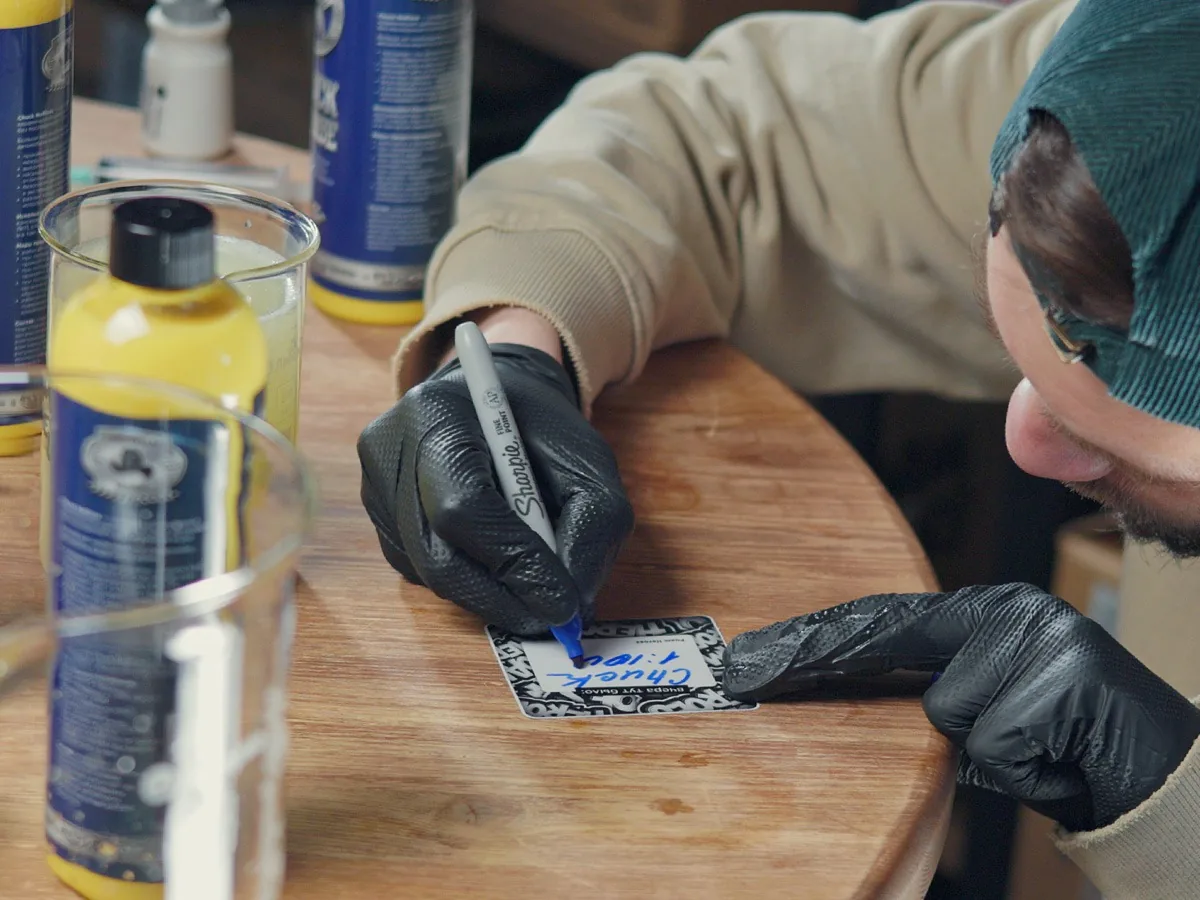
- Rinseless wash: 1:250–1:500
- Clay lube: 1:60–1:70
- Quick Detailer: 1:100
WRAP-UP
The main rule: first figure out the job, the surface and how you'll apply it, then pick the dilution, and only then calculate how much water and concentrate you need.
And always account for the real volume of your container so the finished mix doesn't overflow the tank.
Products in this article
Everything mentioned here, one click away.
chemical-resistant measuring cup
Sprayers, Bottles & Buckets
Chuck NoRinse
ceramic rinseless wash soap
Chuck NoRinse
ceramic rinseless wash soap
Acid Citrus
acidic car wash soap
Acid Citrus
acidic car wash soap
chemical-resistant measuring cup with handle
Sprayers, Bottles & Buckets
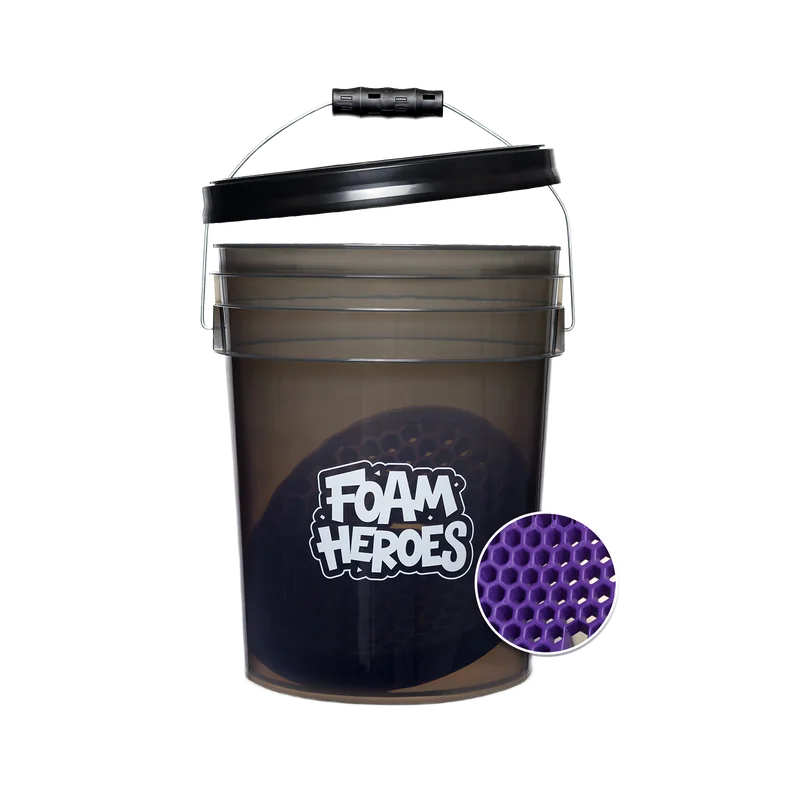
Detailing Bucket
with grit guard and lid for detailing washes
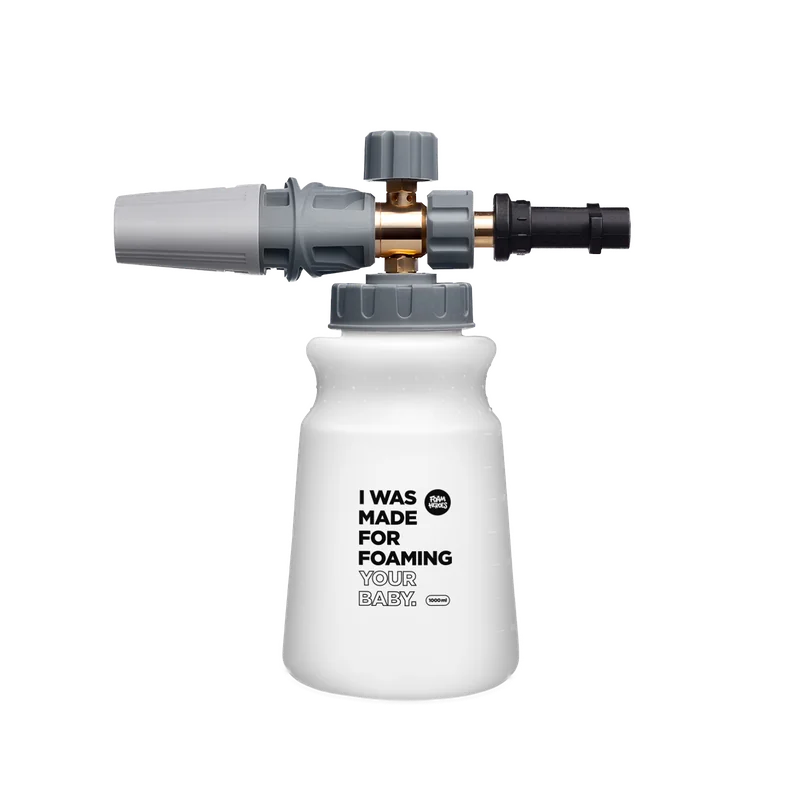
Minigun
foam cannon for pressure washers, Karcher-K adapter