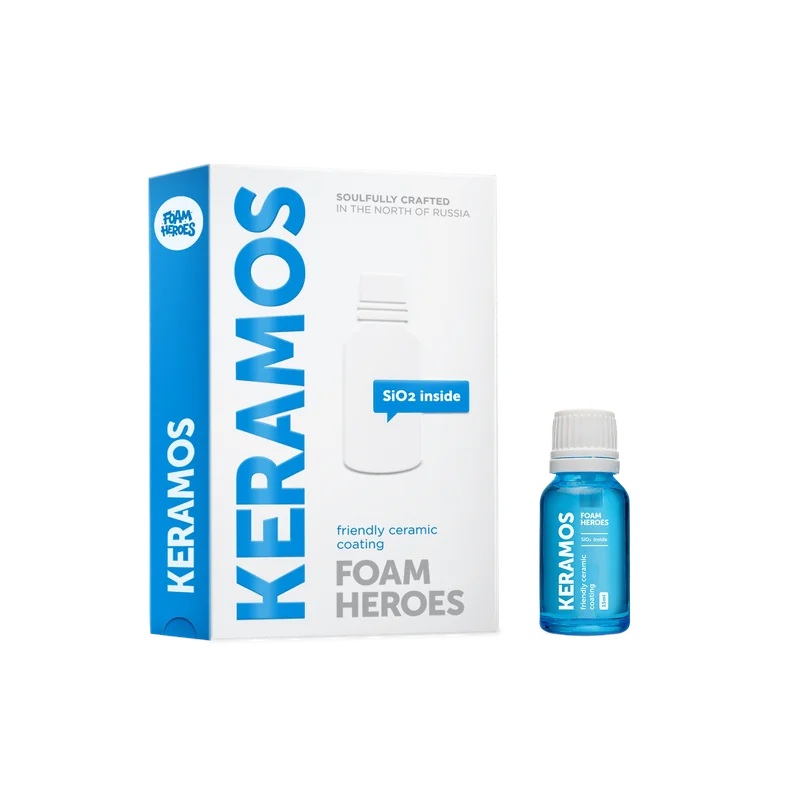
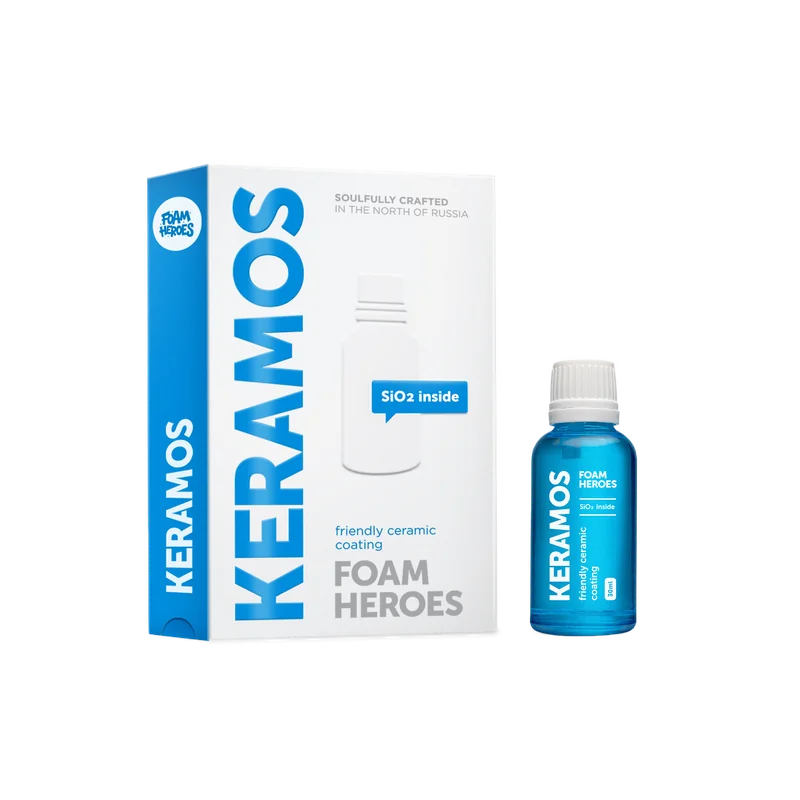
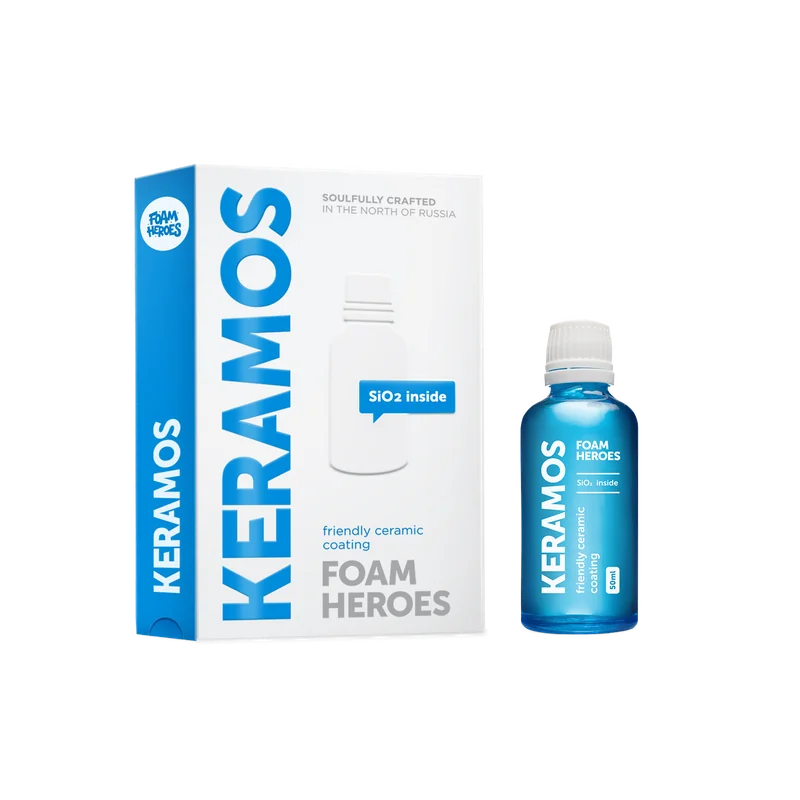
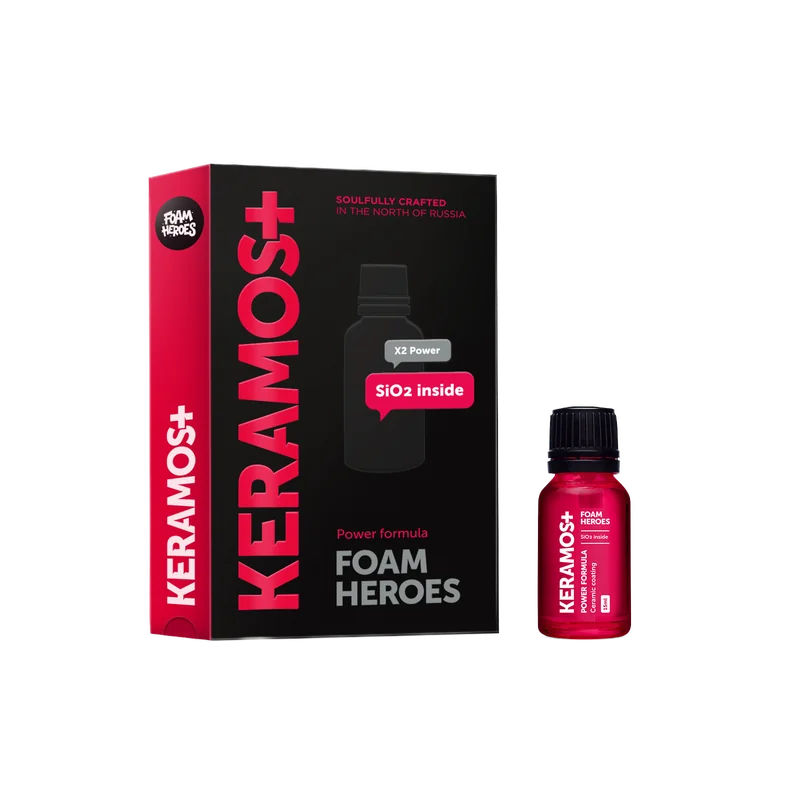
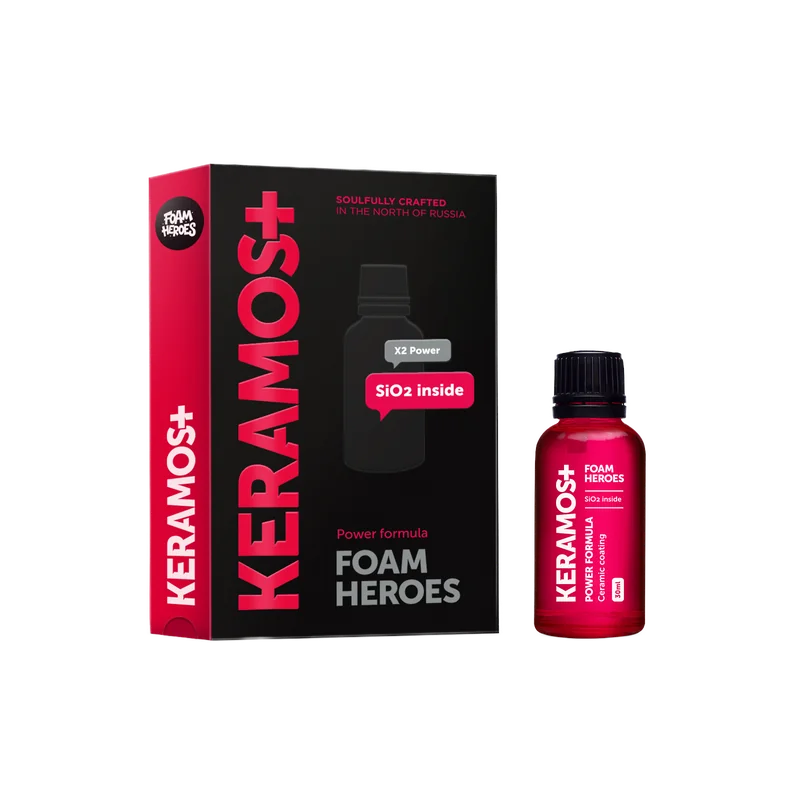
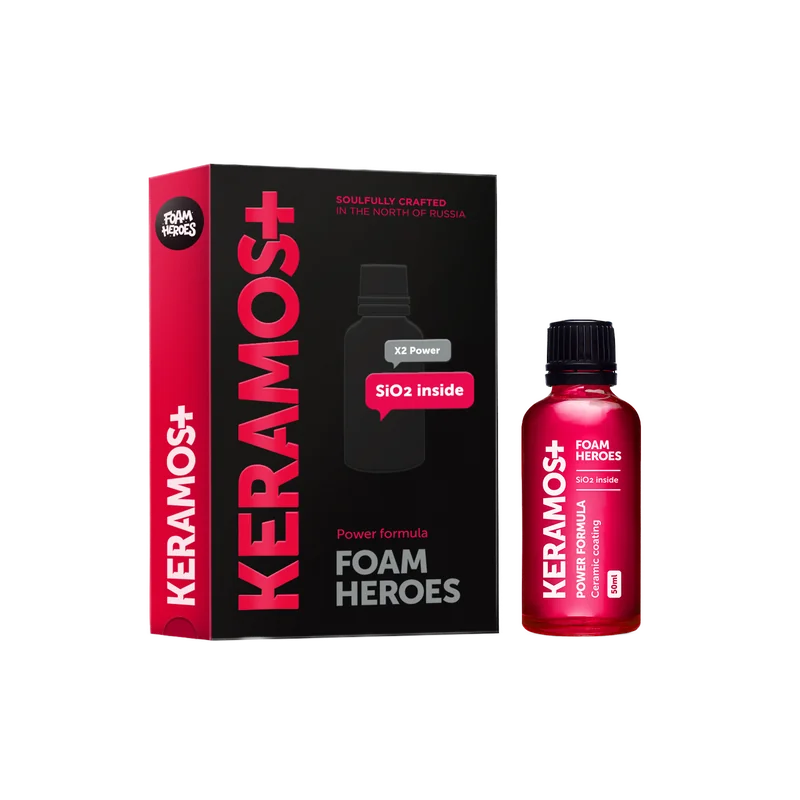
Keramos delivers strong water beading and gloss. Protection lasts up to 12 months, coverage per sedan is 8–12 ml (0.3–0.4 fl oz) for one layer. You can apply a second layer no sooner than an hour later. Keramos+ gives you a self-cleaning effect, color depth and a slightly deeper color. Protection lasts up to 18 months, coverage is 10–15 ml (0.3–0.5 fl oz). Apply one layer only; paint correction before application is a must.
Both products work on protective films, and Keramos+ also works on exterior trim.
Before you apply, wash the car thoroughly, remove iron fallout and tar with Double Iron and Orange Spirit, polish the paint and wipe it down with Easy Prep. Work in a clean, ventilated space, out of direct sun and away from dust. Ideal conditions are 68 to 77 °F (20 to 25 °C) and 40–60% humidity. Wear gloves. Important: a ceramic coating doesn't hide paint defects — it locks in the condition of the surface underneath.
After application, keep the car dry for 8 hours and don't wash it for 7 days. After that, use gentle Gentle Soap foam and a pH-neutral or acidic car wash soap. Acid Shock works on cars with a ceramic coating: it helps neutralize alkali and remove hard-water spots. Avoid strong alkaline products on hot paint and skip abrasive products. When water beading starts to fade, you can restore it with products from the “Waxes, SiO2 sealants and quick detailers” section.
Does a ceramic coating protect against scratches?
Ceramic coatings don't protect the paint from physical damage or scratches. For real scratch protection, use paint protection film (PPF).
How long does a ceramic coating last?
Keramos protects the paint for up to 12 months, Keramos+ for up to 18. Actual life depends on how well the paint was prepped, whether you follow the dwell time, and how you care for the car afterward. After application, wait at least 8 hours before the car touches water and 7 days before the first wash.
How much do you need for one car?
A sedan takes 8–12 ml (0.3–0.4 fl oz) of Keramos or 10–15 ml (0.3–0.5 fl oz) of Keramos+. A 15 ml (0.5 fl oz) bottle is enough for a small car, and 50 ml (1.7 fl oz) covers a large vehicle or several cars.
Can you apply the product to unpolished paint after paint decontamination?
If the paint hasn't been polished, classic Keramos is the better choice. Keramos+ requires paint correction — without it the product won't work properly.
How is Keramos+ different from regular Keramos?
Keramos+ gives a deeper color, stronger water beading and a more noticeable visual result. Keramos+ requires paint correction before application. Keramos can be applied in 2 layers, while Keramos+ takes only 1.
The car is fully wrapped in paint protection film. Does it make sense to apply Keramos right away?
If the film already has a water-repellent top coat, you don't need an extra coating right after the wrap. Keramos+ works on paint protection film, but since there are many manufacturers and film formulas differ, test compatibility on a small hidden area first.
Can you apply it to PPF?
Yes, both coatings work on gloss PPF. Before application, test the product on a small hidden area to check compatibility with your specific film.
Can you apply Keramos and Keramos+ to matte films?
No, we don't recommend applying them to matte PPF. For matte films, use ceramic coatings made for matte surfaces.
Which towel is better for buffing off the coating — plush or short-pile?
To buff off Keramos+, use a short-pile microfiber towel — Long Short or Terry Wipe.
If you apply Keramos+ to a new car, is paint correction needed?
Even on a new car you need a light polish with a soft pad before applying Keramos+. It helps prep the surface and lets the coating work the way it should.
Which products should you wash the car with after applying Keramos and Keramos+?
All of our products are safe for ceramic coatings. For touchless wash in warm weather, go with Gentle Soap; in fall and spring, Citrus Buddy; and for heavy dirt, Foam Buddy. For contact wash, use the pH-neutral Slick Ice, Cola Bay or Slimy Foam. Every so often, use the acidic Acid Shock or Acid Citrus.
After application, at what point do you start buffing?
Start buffing when rainbow streaks appear on the surface. That's the sign the coating is ready to buff off.
Can you apply Keramos or Keramos+ to exterior trim?
Yes, you can use both products on exterior trim. Always test compatibility on a small, hidden spot first. On matte plastic, a satin effect may appear after application.
Does Keramos+ spread and buff off as easily as regular Keramos? Is there anything special about applying it?
Keramos+ goes on and buffs off just like classic Keramos. The main difference — work in small sections of about 50 × 50 cm (19.7" × 19.7") so the product doesn't dry before you buff it off.
Can you apply Keramos and Keramos+ to acrylic?
These coatings aren't made for acrylic paint.
Can you later apply an SiO2 spray sealant on top?
Yes, you can add an SiO2 spray sealant later. But we recommend doing it only once the coating's water beading starts to fade. While Keramos/Keramos+ is still working well, there's no need for extra products.
How many drops do you need to load the applicator pad?
For the first load, apply a generous amount of product — don't skimp. After that, 4–5 drops per load is enough.
Can you apply a hard synthetic wax over the ceramic coating?
We don't recommend applying hard synthetic wax or using wax-based soaps over Keramos and Keramos+. An acidic wash soap is all you need for maintenance. Over time, you can use Blaze Booster after a wash to refresh the gloss and water beading.
What conditions do you need to apply it outdoors?
The best temperature for our products is 68 to 77 °F (20 to 25 °C) at 40–60% humidity. Working outside, pick a spot out of the wind and direct sun. Dwell time depends on conditions: buff the coating off once the telltale rainbow sheen appears.
How long does a ceramic coating keep after opening?
Shelf life depends on how long the bottle stayed open and in contact with oxygen, plus your storage conditions. On average, you can keep the product up to 1 year after opening.
Can you apply Keramos and Keramos+ to exterior plastic and rubber parts of the car?
Yes, you can apply these products to moldings, rubber seals, headlights and other exterior parts. But they aren't dedicated products for plastic and rubber, so the effect on those surfaces may be less pronounced.